
How to Set Up Tradecopia Trade Copier for Futures Prop Trading (Step-by-Step)
If you trade futures prop firms, you’ve probably hit this problem: you finally find a setup you like… but managing multiple accounts becomes messy.
Trade copiers exist to solve that workflow problem. This guide shows exactly how I set up Tradecopia so trades can be copied cleanly,
without turning your risk plan into chaos.
Quick note: This page is educational. It’s not financial advice. If you’re new to prop firm rules (drawdown, payout buffers, consistency rules),
start with this first: Futures Prop Firm Rules Explained.
Who this guide is for (and who should skip it)
This is for you if:
- You trade more than one evaluation/funded account and want consistent execution.
- You already have a risk plan and you want your copier to follow it (not override it).
- You want fewer “oops” mistakes (wrong account, wrong size, missed bracket, etc.).
Skip this (for now) if:
- You’re still gambling through evals. Start here first: How to Pass a Futures Prop Firm Evaluation.
- Your main problem is breaking rules (revenge trading, sizing spikes, overtrading). Read: Top Mistakes Traders Make in Prop Firm Challenges.
What a trade copier actually does (simple explanation)
A trade copier connects a Master account (where you place the trade) to one or more Follower accounts (that replicate the orders).
The goal isn’t “more trades.” The goal is one clean decision executed consistently across accounts.
Master vs Follower (example)
- Master: your main account where you click buy/sell.
- Followers: your other eval/funded accounts that copy the same entries/exits.
- Ratio: follower size can be equal, smaller, or scaled (depending on account size/rules).
This is where many traders get hurt: they copy trades but forget that each prop firm account may have different constraints.
That’s why understanding drawdown mechanics matters. If you haven’t read it yet, this page will save you money:
drawdowns, scaling, and payouts explained.
My Tradecopia setup video (watch first)
If you prefer following along visually, here’s my full setup walkthrough. I recommend watching once all the way through,
then coming back and doing the steps below.
Tip: if your prop firm has strict consistency rules, copying trades can amplify both your good and your bad habits.
Make sure your process is stable first: evaluation framework here.
Step-by-step: setting up Tradecopia the right way
Step 1: Decide your “master” account (don’t skip this)
Choose the account where you’ll execute trades. For most traders, the best master account is the one with:
the most stable connection and the cleanest order workflow.
If you constantly log in/out of your master, you increase errors.
Step 2: Connect all accounts (master + followers)
Add each account you want to copy to inside Tradecopia. Before you copy anything, confirm:
- Each account is connected and visible.
- Symbols match your platform (ES, NQ, etc.).
- Trading permissions/data feeds are active.
Optional screenshot: Insert an image here showing the connected accounts list.
Step 3: Create your copier group (Master → Followers)
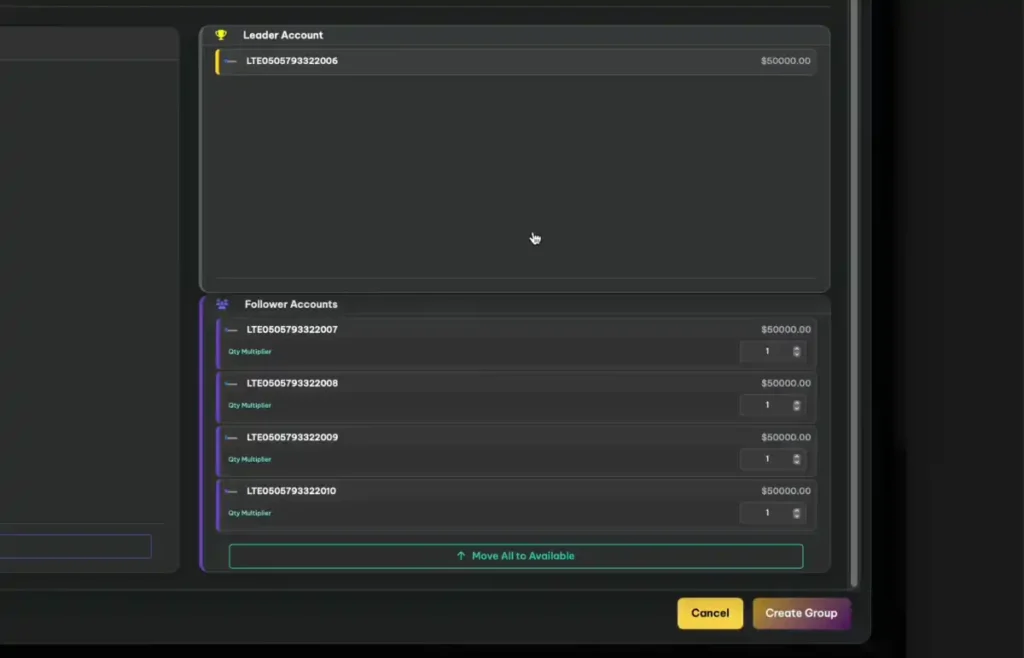
Build one group for your main workflow. Example:
- Group name: Prop Copy – ES
- Master: your main execution account
- Followers: other eval/funded accounts
Step 4: Set the copy method (1:1 vs ratio)
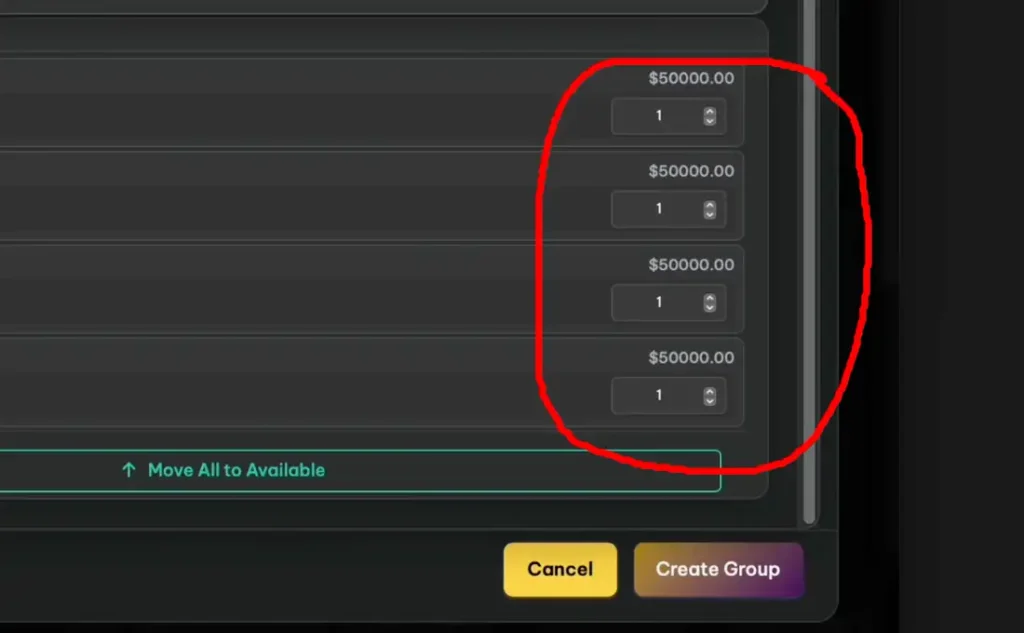
If all accounts are the same size, 1:1 is simplest. If you have different account sizes, use ratios carefully.
My general rule: keep it boring and consistent.
- Same account sizes: start with 1:1.
- Different sizes: use ratios (example: 50K follows 100K at 0.5 size).
This matters because copying the same size into a smaller account can trip drawdown rules faster. If that’s confusing, read: EOD vs trailing drawdown.
Step 5: Make sure bracket orders copy correctly (SL/TP)
This is the part most people mess up. You want your risk to copy cleanly:
- Stop loss copies correctly
- Take profit copies correctly
- Partial exits (if you use them) behave as expected
Before going live, place one small test trade in sim and verify the followers mirror it correctly.
Step 6: Add safety rules (so one mistake doesn’t blow 5 accounts)
Most traders don’t fail prop firm evaluations because of bad strategies, but because of execution and rule violations — something I explain in detail in Why Most Traders Fail Prop Firm Evaluations (Even When Profitable).
A copier multiplies execution. That’s the point. But it also multiplies mistakes. So add “guardrails.”
- Max contracts per follower (even if your master can trade bigger).
- Disable copying outside your trading window.
- Have a “panic stop” plan (how you immediately flatten/disable copying).
If you’ve ever blown an evaluation because of one emotional trade, you already know why this matters.
Read: the most common prop firm mistakes.
Common Trade Copier mistakes (and how to avoid them)
- Copying without a fixed risk plan.
You’ll pass an eval faster by trading less, not by copying more. Start here:
passing prop firm evaluation without gambling. - Ignoring different prop firm rules.
Trailing drawdown and consistency rules behave differently across firms.
Use this as your baseline reference:
rules explained guide. - Not testing bracket orders.
One missing stop loss across 5 accounts is not a “mistake,” it’s a disaster. - Overtrading because it feels “efficient.”
A copier should reduce stress, not increase activity.
If you plan to use a copier across different prop firms, it’s important to understand how rule structures differ — I explain the safest way to do this in Using Trade Copiers Across Multiple Prop Firms Safely.
Where Tradecopia fits in my workflow (realistic expectation)
I don’t use a copier to “trade more.” I use it to execute one good trade cleanly across accounts and reduce operational errors.
If your edge is not consistent yet, a copier won’t fix that. It will just scale the result.
If you’re deciding which prop firm model fits your style, these reviews may help: Futures Prop Firm Reviews hub, plus my current reviews: Topstep,Take Profit Trader, Lucid Trading.
Important: Once your copier is connected, don’t copy live until you’ve followed my Trade Copier Risk Management Checklist (Futures Prop Firms). It prevents the most common blowups (sizing caps, drawdown buffer, daily stops, and execution mismatches).
Quick FAQ
Do trade copiers violate prop firm rules?
Usually, trade copiers are allowed, but each firm can have its own terms. The safer approach is: follow the firm’s written rules and keep your risk consistent. Use this guide to understand the common rule types:
drawdowns, scaling, payouts.
Should I copy trades during an evaluation?
Only if your process is already stable. Otherwise, you can blow multiple evaluations quickly. This guide explains a safer evaluation approach: How to pass a futures prop firm evaluation.
Next steps
- New to prop rules? Read: Prop firm rules explained.
- Still failing evaluations? Read: How to pass evaluations (without gambling).
- Want the full library? Visit: Futures trading guides.